A recent industrial subdivision off De Havilland Drive in Bell Block hit construction delays. The exposed ash layers couldn't support the design traffic without excessive deformation. Our team stepped in. We ran a subgrade investigation program, pulling Shelby tubes and performing CBR road testing to map the weak zones. The solution combined selective over-excavation with a reinforced granular cap. That's the reality of building on New Plymouth's ring plain. Volcanic ash and lahar deposits control everything. Flexible pavement design here must account for seasonal moisture swings that soften the subgrade. A standard cross-section imported from Auckland won't survive. We use local aggregate sources, calibrate our moduli with repeated load triaxial data from our ISO 17025 lab, and verify every lift with in-situ permeability checks when drainage is suspect.
A mechanistic design calibrated with local repeated load triaxial data outperforms any empirical catalogue—especially on New Plymouth's moisture-sensitive volcanic ash.
Approach and scope
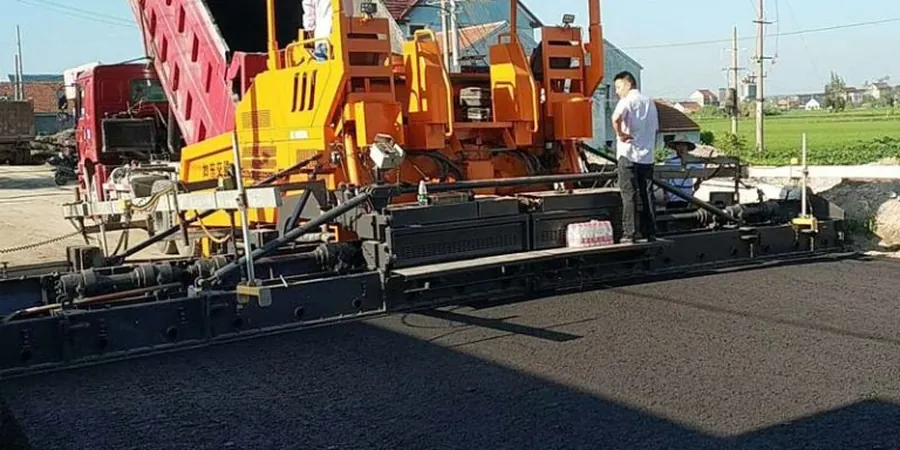
Local geotechnical context
New Plymouth's high annual rainfall—over 1,400 mm—creates a persistent saturation risk. The coastal fringe also brings salt spray and occasional inundation. Ignoring drainage in flexible pavement design here accelerates fatigue cracking. Water enters through edge breaks, saturates the granular layers, and destroys the effective stress. We see this failure mode in older residential streets across Moturoa and Fitzroy. The subgrade turns to slurry under repeated loading. Our design always includes positive crossfall, edge drains, and a permeability check on the finished subgrade. The volcanic ash's high void ratio makes it collapsible when wet. A pavement without a solid seal traps moisture at the interface. That's why we specify a stiff asphalt layer with low air voids. The heavy truck traffic from Port Taranaki adds a high shear stress demand. We model these loads with full axle spectra, not just ESA equivalency.
Service video
Reference standards
NZS 3404:2009 (Pavement Design), NZTA M/4:2021 (Basecourse Aggregate), NZS 4402 (CBR Laboratory), ISO 17025:2017 (Lab Competence)
Related technical services
Mechanistic Pavement Analysis
We build layered elastic models using Circly or finite element tools. The analysis isolates the critical tensile strain under the bound layers and the vertical compressive strain on the subgrade. Outputs directly feed the thickness design.
Subgrade Improvement Design
For CBR values below 3%, we design lime or cement stabilization. The mix is tested for UCS and durability in our lab. This avoids the cost of full-scale over-excavation in poor ground areas like the Bell Block flats.
Construction QA/QC Testing
Our field crew performs nuclear density, sand cone, and Benkelman beam deflection tests during construction. Every lot of basecourse is re-sampled. We issue NATA-equivalent reports under ISO 17025.
Typical parameters
Questions and answers
What's the typical cost range for a flexible pavement design package in New Plymouth?
For a standard industrial access road or subdivision street, the design, investigation, and reporting package ranges from NZ$2,450 to NZ$9,510. The final figure depends on the length, traffic loading, and number of boreholes required.
How does the volcanic ash subgrade affect the pavement design?
Taranaki's volcanic ash has high porosity and loses strength rapidly when wet. We typically require a minimum CBR of 5% and often specify lime stabilization to reduce plasticity. The design also includes a thicker granular cap to distribute stress away from the sensitive subgrade.
What traffic loads do you design for?
We design for the full axle load spectrum using NZTA's traffic monitoring data. For heavy industrial yards near Port Taranaki, we often model up to 10 MESA. For residential subdivisions, 0.1 to 0.3 MESA is typical. The design life is usually 25 years for granular pavements.
Do you use local aggregates for the basecourse?
Yes, we specify locally sourced andesite or greywacke aggregates that comply with NZTA M/4. Our lab tests every source for crushing resistance, weathering quality, and particle size distribution before approval. This supports the local quarry industry and reduces haul costs.