The term 'foundations' in New Plymouth refers to the critical structural systems that transfer building loads safely into the ground, ensuring long-term stability and performance. Given the region's dynamic geological profile, ranging from volcanic ash soils to coastal sands, a properly engineered foundation is not just a regulatory requirement but a fundamental safeguard against differential settlement, liquefaction, and ground movement. This category encompasses every stage of the process, from initial geotechnical investigation to detailed structural design and construction oversight, ensuring that residential, commercial, and industrial structures remain secure for their intended lifespan.
New Plymouth's geology is dominated by the volcanic deposits of Mount Taranaki, resulting in a complex subsurface of interbedded tephra, lahar deposits, and alluvial silts. This creates highly variable ground conditions, often within a single site. Loose, uncompacted sands in coastal areas near Port Taranaki present a moderate liquefaction risk during seismic events, while inland areas may feature expansive clays that shrink and swell with moisture changes. These local conditions demand a bespoke approach to foundation engineering, moving beyond standard solutions to address specific soil bearing capacities and reactivity. A deep understanding of these factors is why advanced techniques like pile foundation design are frequently specified to bypass unstable surface strata and reach competent bearing layers.
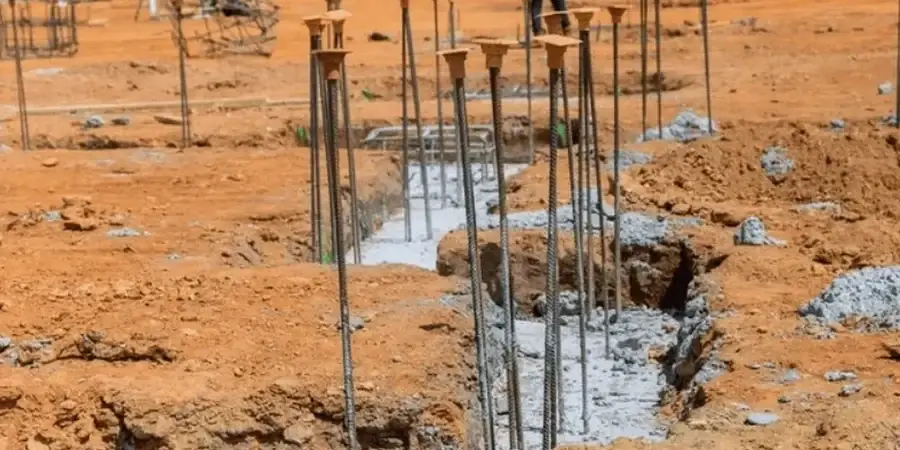
All foundation work in New Plymouth must strictly adhere to the New Zealand Building Code, primarily Clause B1 'Structure' and Clause E2 'External Moisture'. Compliance is demonstrated through Verification Method B1/VM1 and the Acceptable Solution B1/AS1, which directly references the joint Australian/New Zealand standard AS/NZS 1170 for structural design actions. For geotechnical assessments, the New Zealand Geotechnical Society (NZGS) guidelines, particularly the 'Module 1: Field Investigation' and 'Module 4: Earthquake Resistant Foundation Design', are considered mandatory best practice. Council consenting bodies in the Taranaki region will require a site-specific geotechnical report and a Producer Statement (PS1) from a Chartered Professional Engineer (CPEng) before any foundation construction can commence.
The types of projects that require this specialised category of work are diverse. From new residential builds on the city's expanding hillside subdivisions, where cut-and-fill platforms create complex soil profiles, to the refurbishment of heritage commercial buildings in the CBD, where shallow footings must be assessed and often underpinned. Light industrial facilities on the outskirts of the city, designed to house heavy machinery, require deep foundations capable of resisting dynamic loads and vibration. Regardless of the scale, the reliance on rigorous ground investigation and design principles, such as those found in pile foundation design for deep foundations, remains constant. Choosing the correct foundation typology is a decision that directly impacts a project's cost efficiency, buildability, and long-term durability in New Plymouth's unique environment.
Available services
Questions and answers
Why is a site-specific geotechnical investigation mandatory for foundations in New Plymouth?
A site-specific investigation is critical because the volcanic and coastal geology of New Plymouth creates highly variable soil conditions, even between adjacent properties. It identifies specific risks like liquefaction potential, expansive clays, or weak fill that standard codes cannot predict. This data is legally required by the NZ Building Code and the local council to design a safe, compliant foundation and obtain building consent.
What is the difference between shallow and deep foundations in the context of Taranaki's soil conditions?
Shallow foundations, like standard strip footings, spread loads near the surface and are suitable for sites with strong, non-reactive soils. Given Taranaki's frequent layers of weak volcanic ash or loose sands, deep foundations are often necessary. Deep systems, such as piles, transfer building loads down through unstable strata to more competent, load-bearing ground at depth, mitigating settlement and seismic risks.
How do New Zealand's seismic requirements affect foundation design in this region?
New Plymouth's seismic hazard, though moderate, demands foundations designed for earthquake loads per AS/NZS 1170. The primary concerns are preventing liquefaction-induced bearing failure in sandy soils and ensuring the foundation can accommodate ground shaking without detaching from the structure. This often requires reinforced concrete slabs and specifically detailed connections between the foundation and the structural frame.
What are the signs that an existing building in New Plymouth might have a foundation problem?
Common indicators include sticking doors or windows, visible cracks in interior plasterboard or exterior brickwork, and uneven or sloping floors. In New Plymouth's reactive clay soils, these symptoms often appear after prolonged dry or wet periods. Externally, you might see cracking in the foundation wall itself or gaps appearing around window frames, all of which warrant a professional structural assessment.
Location and service area
We serve projects across New Plymouth and surrounding areas.