New Plymouth’s coastal terraces and the shadow of Mount Taranaki create a unique geotechnical setting where standard retaining solutions often fall short. NZS 3404:1997 and the NZGS anchor guidelines demand a thorough understanding of local soil-structure interaction, especially in the variable volcanic lahar deposits and weathered sandstone that define the city’s subsurface. We design both active anchors—pre-stressed to control deformation from day one—and passive anchors that mobilise resistance as the ground moves, because the choice between them hinges on whether you’re restraining a deep excavation on Currie Street or stabilising a slip-prone slope above the Waiwhakaiho River. Our design approach integrates site-specific data from in-situ permeability testing to confirm grout retention in fractured rock, and we routinely cross-check anchor capacity with a triaxial assessment of the bonded zone’s drained strength, because in Taranaki’s wet climate, pore pressure assumptions can make or break a design.
A well-designed anchor system transfers load past the slip circle into competent ground—in New Plymouth, that competent ground might be weathered ignimbrite at 6 metres or lahar-cemented conglomerate at 14 metres.
Approach and scope
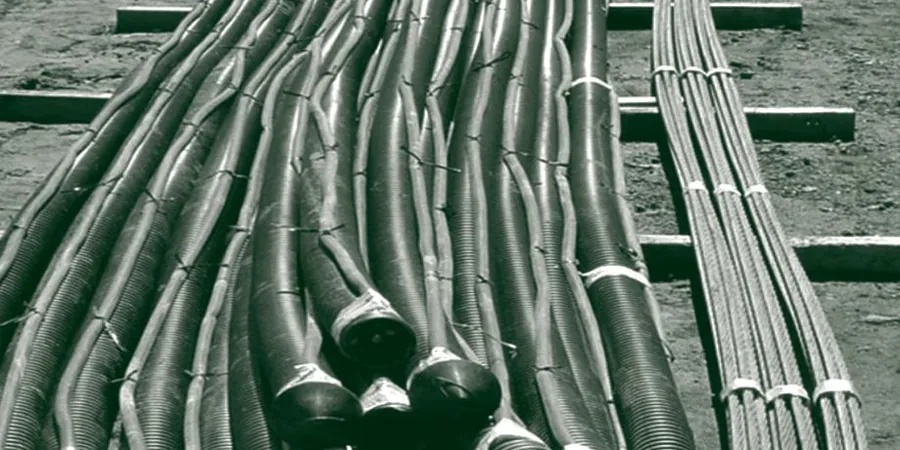
Local geotechnical context
New Plymouth’s expansion eastward into the Bell Block area and westward across the port hills has pushed development onto ground that previous generations left alone: reworked volcanic debris, fill over old swamps, and coastal bluffs subject to wave undercutting. An under-designed anchor in these conditions doesn’t just creep—it can fail suddenly if a design assumption about bond stress proves optimistic in saturated, low-plasticity soils. We’ve seen projects where substituting a cheaper passive-only scheme for an active system led to excessive wall deflection, triggering costly remedial works and neighbour disputes. The NZGS anchor guideline is clear: proof testing is not optional, and sacrificial anchor testing to failure on the project site provides the only reliable calibration for bond length. Skipping that step in a city where three different volcanic formations can intersect within a 40-metre excavation is a risk no structural engineer should carry.
Service video
Reference standards
NZS 3404:1997 (Steel Structures Standard – anchor components), NZS 1170.5:2004 (Structural design actions – Earthquake actions – New Zealand), NZGS Anchor Guidelines (2005, updated 2018 draft), BS 8081:1989 – referenced for grout design in temporary works, AS/NZS 4671:2001 (Steel reinforcing materials – prestressing bar compliance)
Related technical services
Active Anchor Design & Pre-Stress Specification
Full design of strand and bar anchors with locked-off loads calculated to limit wall displacement to less than 0.2% of retained height in sensitive urban settings.
Passive Anchor & Soil Nail Design
Grouted dowel and self-drilling anchor solutions for slope stabilisation and temporary excavation support, with bond lengths calibrated to local lahar and sandstone strata.
On-Site Proof Testing & Supervision
We write the testing specification, witness the sacrificial and proof tests, and interpret the load-extension curves to confirm design assumptions are met before sign-off.
Corrosion Risk Assessment & Protection Design
Soil aggressivity testing, resistivity profiling, and selection of encapsulation systems that meet the 50-year design life required by NZS 3404 for permanent anchors.
Typical parameters
Questions and answers
What is the difference between active and passive anchors for a retaining wall in New Plymouth?
Active anchors are pre-stressed during installation to immediately lock in a restraining force against the wall, which keeps lateral deflections very small—important when the wall supports a road or an adjacent building. Passive anchors are un-tensioned grouted bars that only develop resistance once the soil mass starts to move; they suit slope stabilisation and temporary cuts where some deformation is acceptable. In New Plymouth’s lahar soils, active systems often give better control because the soil’s stiffness can degrade quickly once movement begins.
How much does anchor design cost for a typical New Plymouth project?
Design fees for a single anchor-supported wall or slope generally range between NZ$1,650 and NZ$6,190, depending on the number of anchor rows, the complexity of the ground profile, and whether sacrificial pull-out testing is included. A detailed proposal is always provided after reviewing the geotechnical investigation data.
Do you handle the NZGS-required proof testing on site?
Yes. Our team prepares the testing specification aligned with the NZGS Anchor Guidelines, attends site to witness both sacrificial tests to failure and the production proof tests, and then reviews every load-extension plot before issuing the acceptance certificate. This independent oversight is critical for detecting grout loss or bond anomalies early.
What ground investigation data do you need before starting an anchor design?
At a minimum we need borehole logs with SPT N-values or CPT cone resistance through the proposed bond zone, laboratory shear strength data from the anchor horizon, and soil aggressivity results (resistivity, pH, chloride and sulphate content). If the bond zone is in rock, we also look for RQD and fracture spacing. For complex sites near Port Taranaki or the coastal cliffs, we often recommend a dedicated onshore investigation with a few machine-drilled holes to confirm the stratigraphy.