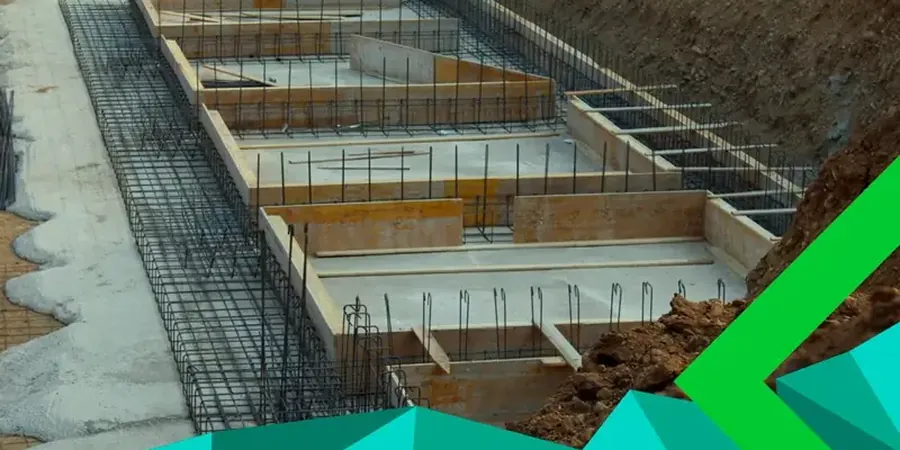
New Plymouth sits at roughly 39 degrees south, where the prevailing westerlies have shaped more than just the coastline — they’ve deposited layer upon layer of volcanic ash over millennia. The city’s last significant seismic shake, the 2018 M5.2 event centred near Opunake, reminded everyone that Taranaki is no stranger to ground movement. For footings and slab-on-grade systems, those alternating tephra and residual clay bands create a soil profile that needs careful reading before a single bucket goes in the ground. We’ve spent years correlating borehole data across suburbs like Vogeltown, Welbourn, and Fitzroy, and the variability from one section to the next can be striking. A shallow foundation design here isn’t just a bearing capacity number; it’s a layered interpretation of what’s underneath, often supported by test pits to visually log the near-surface stratigraphy and flag any buried organics before the structural engineer commits to a footing geometry.
In New Plymouth’s layered tephra profiles, bearing capacity often isn’t the limiting factor — it’s differential settlement across short distances that governs footing design.
Approach and scope
Local geotechnical context
The Egmont Volcanic Centre has blanketed New Plymouth with a stratigraphy that geotechnical engineers learn to respect. What looks like a stiff, overconsolidated silt at 600 mm depth can soften dramatically where perched groundwater sits on a less-permeable paleosol layer. We’ve seen sections in Spotswood where the bearing material changed from a competent sandy ash to a compressible peat lens within the footprint of a single residential slab. That kind of lateral variation is what catches out a design based purely on regional geological maps rather than site-specific investigation. Volumetric stability is another concern: some of the halloysitic clays in the area are moderately reactive and can heave or shrink with seasonal moisture changes, putting shallow footings through repeated stress cycles. Ignoring those cycles leads to cracked slabs and callbacks. The other variable is seismic demand. While New Plymouth isn’t on the plate boundary, the 2018 swarm near Opunake confirmed that shallow crustal events can deliver short-period shaking that matters for stiff, low-rise structures. A shallow foundation design that hasn’t checked bearing capacity under seismic load, including the 1/300 angular distortion limit for brittle claddings, leaves the owner exposed to a very preventable failure mode.
Reference standards
NZS 3404:2025 Steel Structures (piles and base plates, referenced for design philosophy), NZS 4203:1992 General Structural Design (legacy reference still invoked by some territorial authorities), NZS 1170.5:2004 Structural Design Actions – Earthquake Actions, NZGS Soil Classification Guidelines (field logging and description), AS 2159:2009 Piling Design and Installation (referenced where shallow-to-deep comparison is needed)
Related technical services
Subsurface Investigation and In-Situ
Machine-excavated test pits and hand-auger boreholes across the building footprint, logged to NZGS standards. In-situ density by nuclear gauge or sand cone, pocket penetrometer profiling, and hand-vane shear in soft layers. We map the lateral extent of any fill, ash bands, or organic lenses before taking samples.
Laboratory Characterisation Programme
Atterberg limits, particle size distribution, moisture content, and undrained triaxial compression on Shelby tube samples. For reactive clay sites we run shrink-swell index testing. All lab work under our ISO 17025-accredited scope, with results keyed to each logged horizon.
Bearing Capacity and Settlement Analysis Report
A site-specific report giving allowable bearing pressures for strip and pad footings, total and differential settlement estimates, and seismic bearing checks per NZS 1170.5. Includes recommendations for minimum embedment, subgrade preparation, and any required Improvement before slab construction.
Typical parameters
Questions and answers
What does a shallow foundation design report cost for a typical residential section in New Plymouth?
For a standard single-dwelling section with two to three test pits or hand-auger boreholes, full lab testing, and a bearing capacity report, the fee ranges from NZ$3,230 to NZ$5,910 depending on access, number of samples, and whether permeability testing is included. Sites with difficult access or deeper investigation needs fall toward the upper end.
How deep do footings need to go in New Plymouth’s volcanic ash soils?
There’s no single depth that works everywhere. In the competent Egmont ash found across much of the city, 450 mm embedment below finished ground is a common starting point, but we adjust that upward where the ash is loose, where organics are present, or where the council requires protection against volumetric movement in reactive clays. The depth is always confirmed by test pit logging, not assumed.
Can I use a shallow foundation on a site with variable fill?
It depends entirely on the fill material, its compaction, and its thickness. In parts of New Plymouth where old gullies were backfilled decades ago, the fill can be loose and heterogeneous. We’ll typically recommend either removing it and bearing on natural ground, or improving it with controlled compaction and a stiffened raft slab. A few test pits across the footprint tell the story quickly.
Do you need to consider earthquake loads for a single-storey house on a slab?
Yes. NZS 1170.5 applies to all structures regardless of size. While a single-storey timber-framed house is low-risk, the shallow foundation still needs a seismic bearing check, particularly for the short-period shaking that New Plymouth can expertise from shallow crustal events. We check that the factored bearing pressure under seismic load stays within the allowable envelope and that angular distortion limits are met.